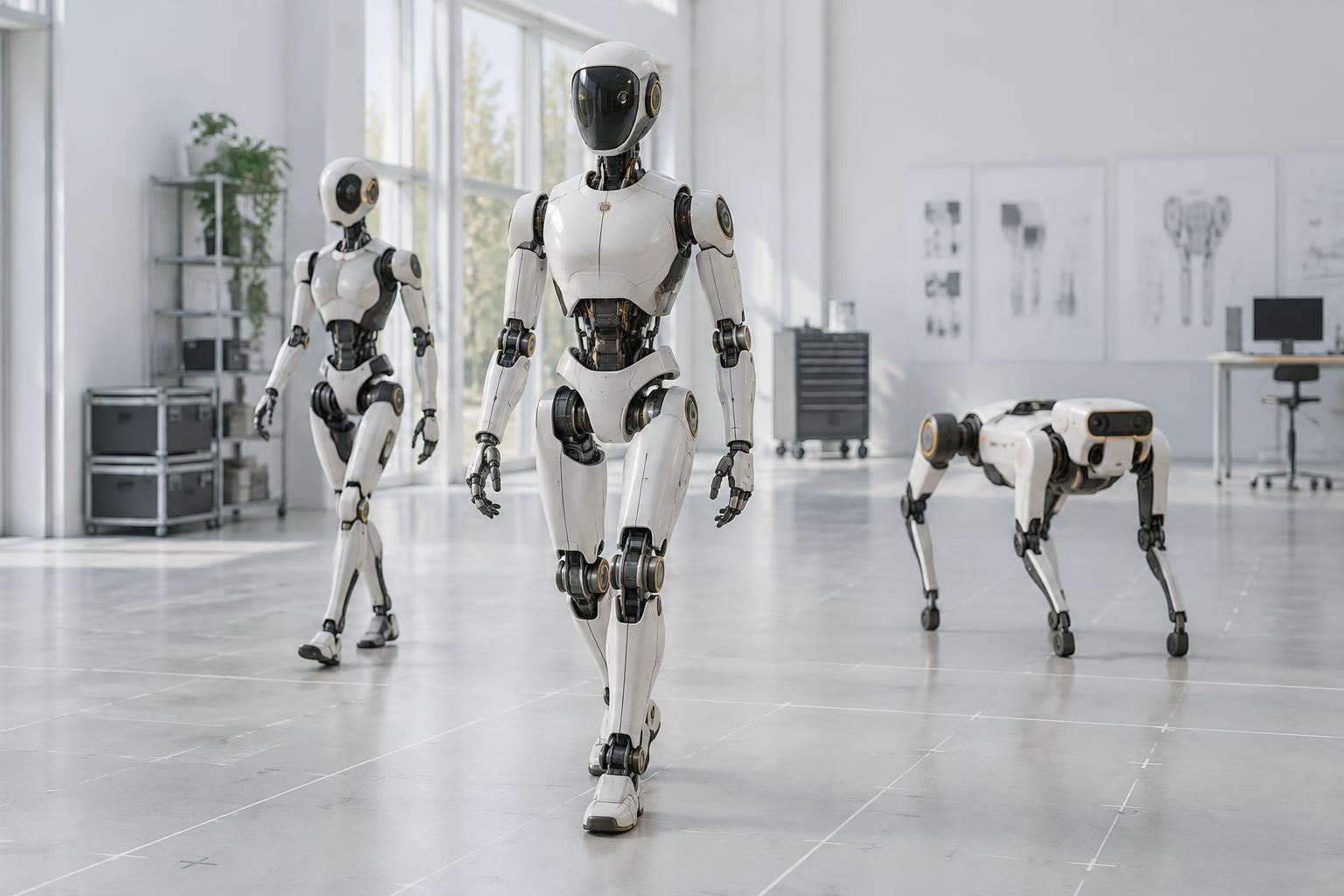
The moment before motion
Trust between people and robots is decided in the half second before a machine moves. If the intention is legible, people relax. If it is not, they brace.
Signals, not faces
We design light, sound and posture as a vocabulary of intent: a quiet preview of where the robot is about to go.
Legibility is a courtesy the machine extends to the people around it.
Field observations
- Pre-motion light cues reduced hesitation.
- Consistent timing mattered more than brightness.
What we build next
Our next prototypes test how these signals scale across a whole fleet working in shared spaces.